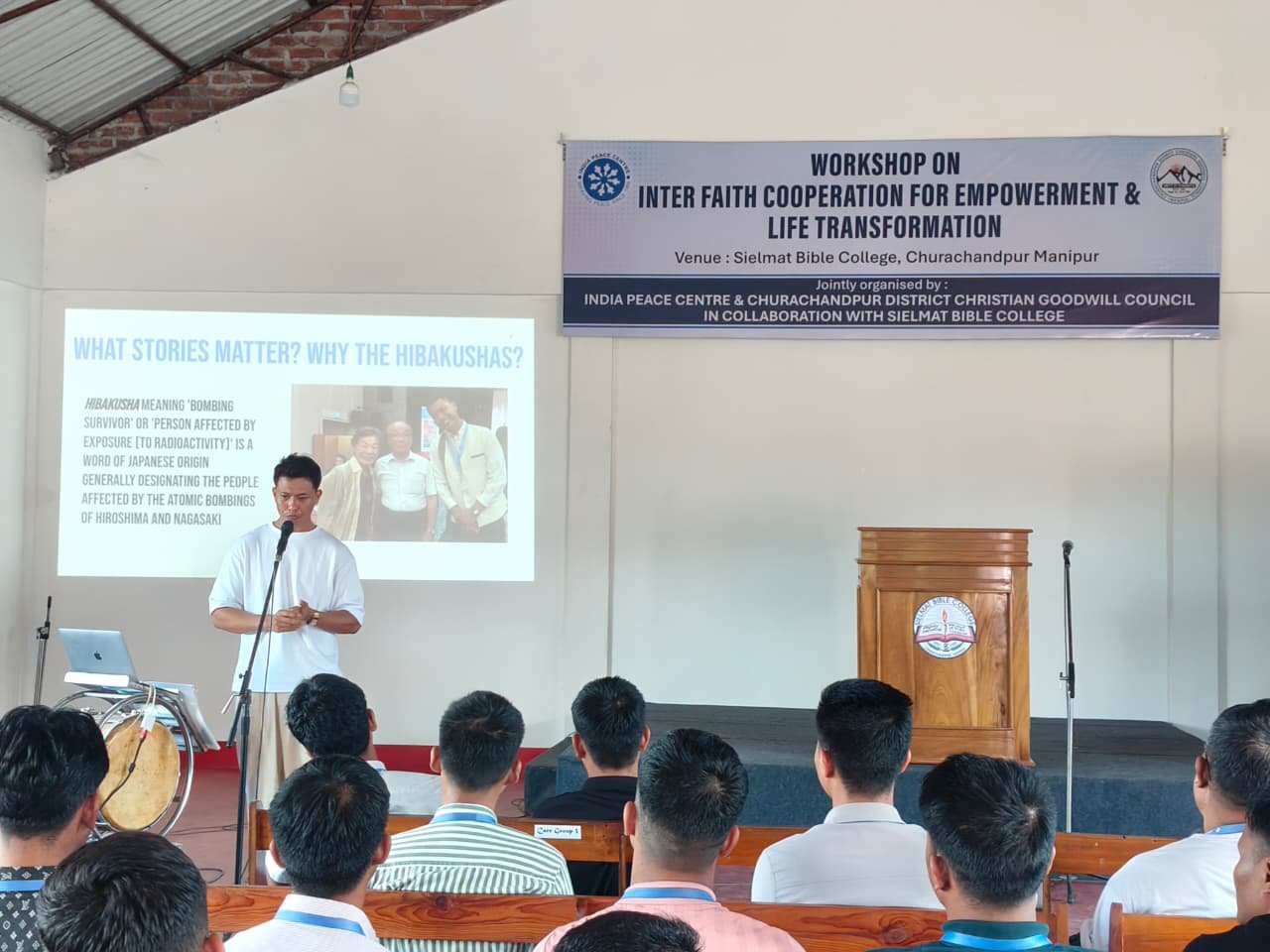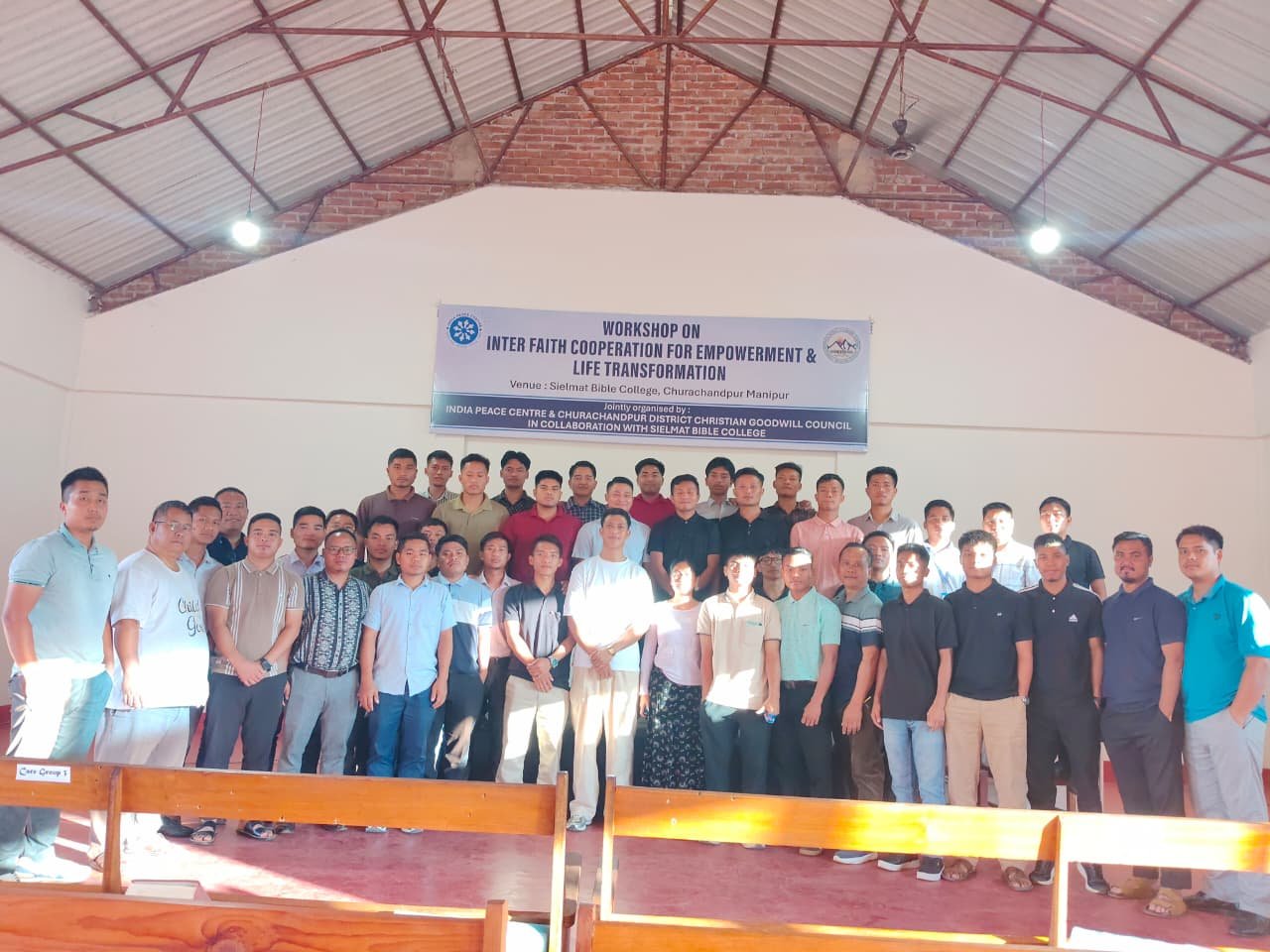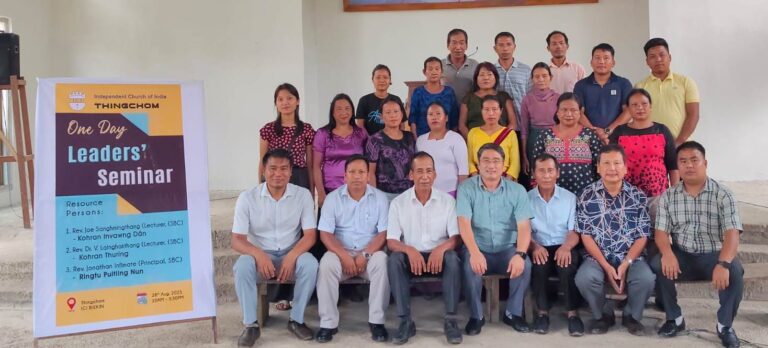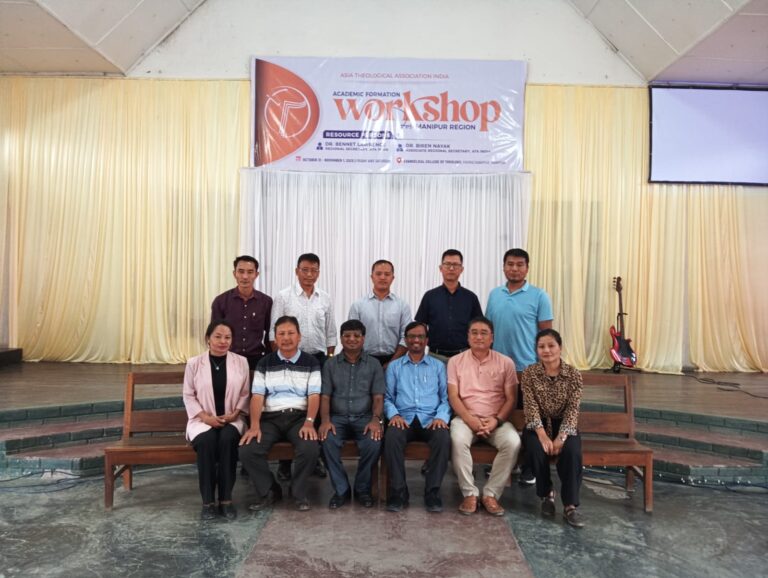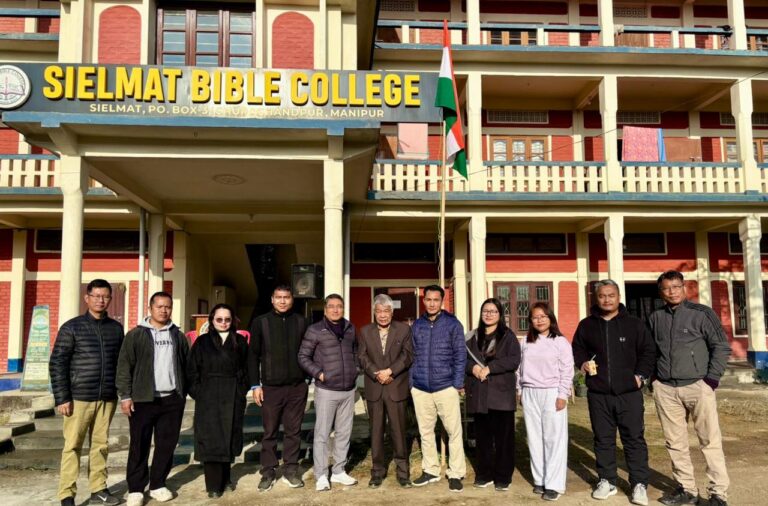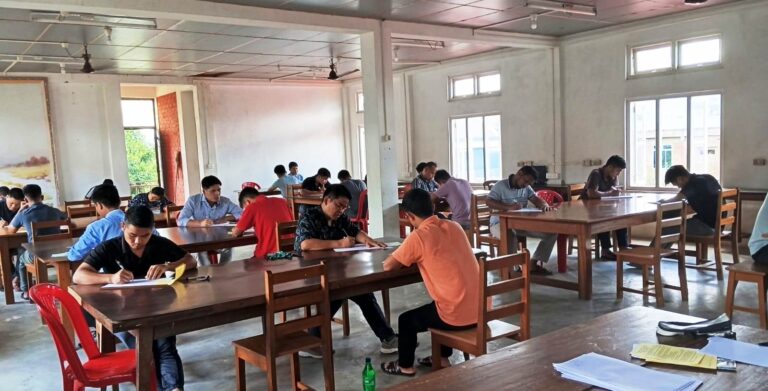
The workshop on Interfaith Cooperation for Empowerment and Life Transformation was organized at Sielmat Bible College in collaboration with the Churachandpur District Goodwill Council and the India Peace Centre, Nagpur. It aimed to foster mutual respect, build social harmony, and mobilize diverse faith communities toward shared social development. The core objectives were to:
- Promote open dialogue and understanding across different religious traditions.
- Identify shared values that support community empowerment and peacebuilding.
- Develop practical strategies for collaborative social action.
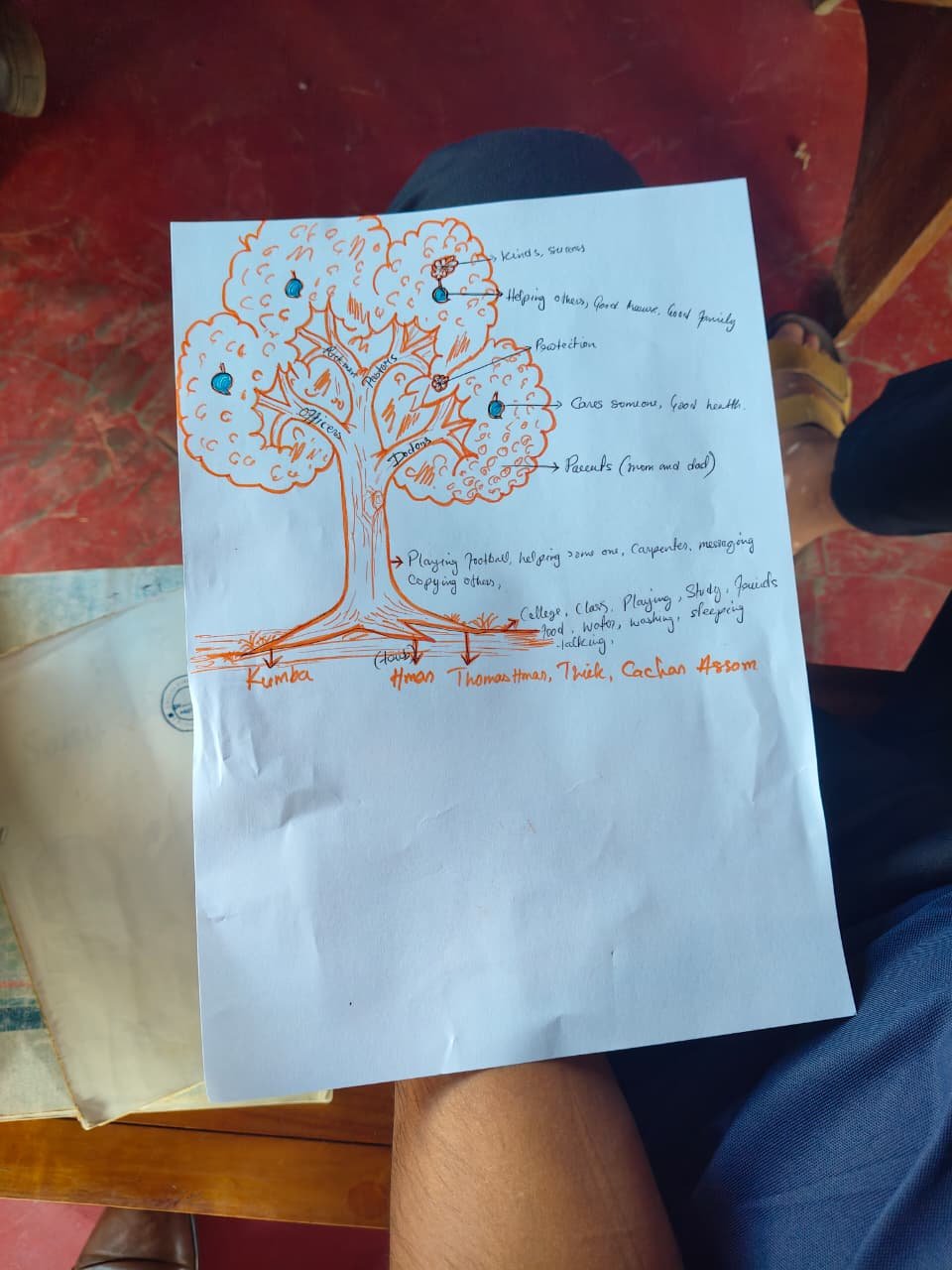
The workshop covered five topics, facilitated by scholars, activists, and a peacemaker from the district. One session focused on transforming workplace and community culture from one of fear and silence into one of trust and open communication. It included an exercise on building psychological safety, which means feeling safe to speak up without being punished. The key discussion question was “What is the biggest reason people don’t speak up?” (for example, fear of retaliation, feeling ignored, or avoiding awkwardness). Finally, participants drew and shared their “tree of life,” reflecting on their identity and what they stand for.
Mr. Joseph, the Students’ Body Secretary, said the sessions were very resourceful and informative. He appreciated the resource persons’ participatory approach, which kept participants actively engaged. One of the most interesting sessions for him was drawing the tree of life, which helped participants understand their identity and values.
Mr. Joseph said he had newly learned three approaches to peace: peacemaking, peacekeeping, and peacebuilding, the last being essential for sustainable and lasting peace. He also learned about three types of violence (direct, cultural, and structural) and four types of power (power over, power with, power to, and power within). He stressed the importance of self-empowerment in bringing about positive change in our communities. He added that listening techniques such as encouraging, restating, clarifying, empathizing, summarizing, and reframing will help strengthen interfaith cooperation.
Finally, Mr. Joseph said that the path to interfaith cooperation begins with listening to one another and understanding each other’s perspectives, beliefs, and values, rather than focusing only on our own desires. He pledged to improve his engagement with interfaith work as a change agent in our diverse society.